
Overview
The summaryInyon is a lightweight, open‑source Android application (2.9 MB, MIT‑licensed) designed to let developers interact with AI‑driven coding agents such as Claude, Codex, Gemini, OpenCode, GitHub Copilot and Antigravity CLI while those agents run on their own computers. The app pairs a phone with a computer by scanning a QR code that the computer prints after a one‑line installation script, establishing an encrypted tunnel or using SSH when a hub is involved. Once paired, the phone receives button‑based prompts from the agents, allowing the user to approve, steer, or edit actions without touching the keyboard. The product supports three connection models: direct phone‑to‑computer pairing, a hub that serves a web interface for browsers and multiple machines, and SSH‑only access for locked‑down servers. Users can view terminal output, diffs, git status, and test results, and can issue commands, file searches, or shell actions from the mobile UI. The site notes that Inyon enforces 5‑hour and weekly usage limits, but otherwise does not publish pricing details. The setup is advertised as a two‑minute process with no need to host separate services.
Inyon is an open‑source Android app that lets you monitor and respond to AI coding agents running on remote machines from your phone.
What this product is
In plain languageInyon is a lightweight, open‑source Android application (2.9 MB, MIT‑licensed) designed to let developers interact with AI‑driven coding agents such as Claude, Codex, Gemini, OpenCode, GitHub Copilot and Antigravity CLI while those agents run on their own computers. The app pairs a phone with a computer by scanning a QR code that the computer prints after a one‑line installation script, establishing an encrypted tunnel or using SSH when a hub is involved. Once paired, the phone receives button‑based prompts from the agents, allowing the user to approve, steer, or edit actions without touching the keyboard. The product supports three connection models: direct phone‑to‑computer pairing, a hub that serves a web interface for browsers and multiple machines, and SSH‑only access for locked‑down servers. Users can view terminal output, diffs, git status, and test results, and can issue commands, file searches, or shell actions from the mobile UI. The site notes that Inyon enforces 5‑hour and weekly usage limits, but otherwise does not publish pricing details. The setup is advertised as a two‑minute process with no need to host separate services.
From Inyon's own site:“Answer your coding agents from your phone”
What makes Inyon different?
vs. alternatives in this categoryInyon’s primary differentiator is its mobile‑first approach to managing AI coding agents. By using QR‑code pairing or a lightweight hub, it eliminates the need for a dedicated server or complex networking setup, letting users interact with agents from any Android phone or tablet. The open‑source MIT license and tiny binary size further set it apart from hosted, proprietary alternatives, emphasizing privacy and easy auditability.
Key features
From the product's own siteScan a QR code printed by a one‑line install script to securely link a phone with a computer without opening ports.
View and answer prompts from coding agents (Claude, Codex, Gemini, etc.) via button taps on the phone.
Run a small hub server on a machine to serve the web app, enabling browser access and multi‑machine coordination.
Connect to servers that cannot run the Android app by using only SSH and tmux, with no additional software required.
The site states the product enforces 5‑hour and weekly plan limits and displays model, context, and cost information.
Who it's for
Grounded in pricing, the site's own claims, and categoryShould use this
Inyon is best suited for individual developers or small teams who run AI‑powered coding assistants on their own machines and want to approve or steer those agents from a mobile device. It also fits users who prefer an open‑source, quick‑setup solution without managing a hosted backend.
Shouldn't use this
The product may not be ideal for organizations that require transparent pricing before committing, as no price tiers are disclosed. It also may not meet the needs of teams seeking third‑party validation or extensive integration documentation, given the lack of independent coverage.
Use cases
Who uses this and whyA solo developer uses Inyon to approve test runs from Claude on a local VM, because the button‑based prompts let them stay in the phone without switching terminals.
A small DevOps team runs Inyon’s hub on a central server to monitor multiple agents across their infrastructure from a browser, enabling unified approvals and real‑time diff reviews on the go.
A remote contractor steers GitHub Copilot agents on a client’s Linux box via Inyon’s SSH‑only mode, using mobile prompts to keep work within security policies without installing extra software.
Where we found it
Little foundLittle found outside the product's own pages and its launch listing. Common for a new product. We found 0 independent sources. This is a count of places, not a judgement of whether the product's claims are true.
- Own siteProduct website
- Product HuntProduct Hunt listing
What works
Grounded in the site's own pages and the evidence foundThe site says Inyon is a 2.9 MB open‑source app that can be set up in two minutes with nothing to host. It also notes the presence of 5‑hour and weekly plan limits, indicating the product tracks usage caps. The mobile UI delivers button‑based answers directly from coding agents, allowing on‑the‑fly interaction.
What to know
Caveats, gotchas, and gapsPricing information is not disclosed on the website; no tiers or costs are listed. The product’s documentation does not detail how the 5‑hour and weekly limits are allocated across features, leaving those specifics unclear. This is a recent launch with limited third‑party coverage.
Pros & cons
+Pros
- Enables real‑time interaction with AI coding agents from a phone, removing the need to stay at a keyboard.
- Open‑source MIT license and a tiny 2.9 MB install size simplify adoption and security review.
- Two‑minute setup without requiring a hosted server or complex configuration.
−Cons
- No publicly disclosed pricing tiers make budgeting decisions difficult.
- Product capabilities are described only by the vendor; independent verification is unavailable.
- Limited third‑party coverage may mean undiscovered bugs or missing integration details.
What the site says
3 from its own pagesStatements taken from Inyon's own pages, each with the page it came from. We list them; we do not rule on whether they are true.
- Inyon 0.22.0 is 2.9 MB and is open source, MITinyon.tech
- Two minutes, nothing to hostinyon.tech
- The product has 5‑hour and weekly plan limitsinyon.tech
What others say
0 outside pagesWe found no independent pages about Inyon yet. That is normal for a new launch, and it is a fact about coverage, not a mark against the product.
How we checked this one
Full methodologyThis review was produced by the SaaSNet.work pipeline — no hands-on testing, no payment from the product. Here's exactly what was checked for Inyon.
We never tested the product hands-on and never accepted payment for this review. Spot something wrong? Request a correction.
Frequently asked questions
3 questionsIs Inyon free?
The site does not list a free tier; pricing information is not disclosed, so a free version is not confirmed.
How much does Inyon cost?
No pricing tiers or amounts are shown on the website, so the cost is currently undisclosed.
What are Inyon's main limitations?
According to the site, the product imposes 5‑hour and weekly plan limits, and the lack of published pricing makes budgeting unclear.
Looking for alternatives to Inyon?
Browse all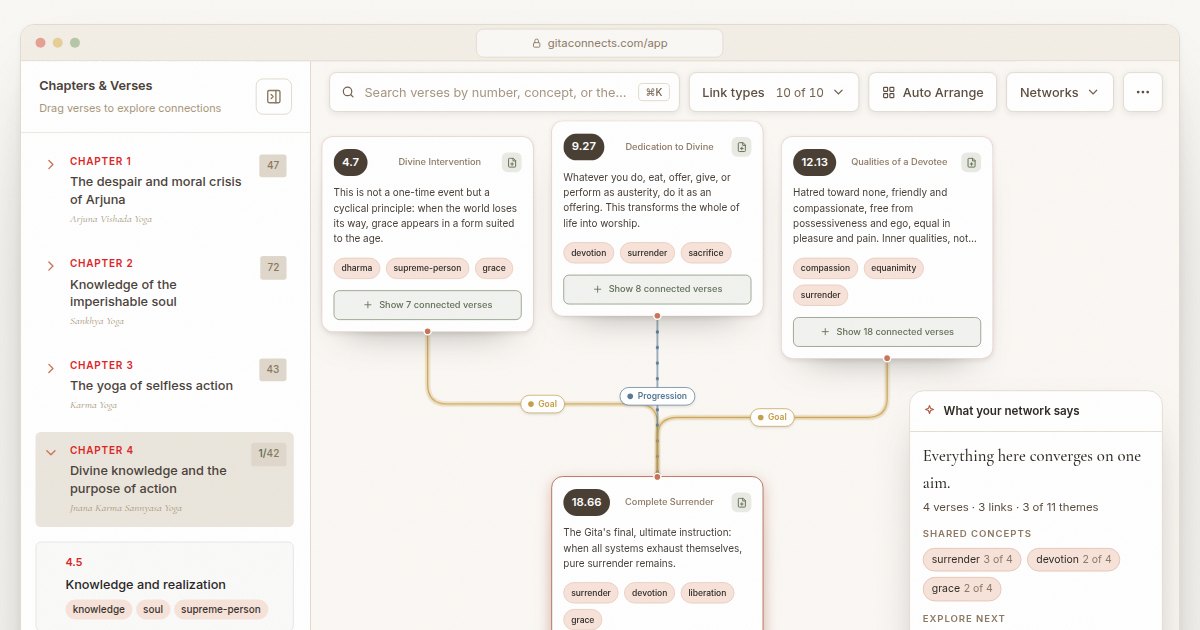
GitaConnects is a free browser-based canvas that maps all 701 Bhagavad Gita verses and the thematic links between them.
CastGhost is a live podcast search and pitch ghostwriting tool that lets professionals draft personalized pitches for free and pay per use.
Guitar Harmony Helper is a browser‑based tab editor that lets guitarists write riffs, find matching scales, and generate harmony parts.